Project Zebra: Tablets, updates, Windows, oh my ►
◄ Export SQL queries to Excel workbook sheets with PowerShell
2025-10-29 📌 Iron Maiden: the remaining six albums (2000-2021)

Preamble... I know Maiden primarily from nearly thirty years of listening to the two-disc version of their 1996 first best of album plus the classic highly-rated Powerslave. This is me going back to the rest of their albums, particularly those released subsequently. Intro here then part 1 here and part 2 here.
* * *
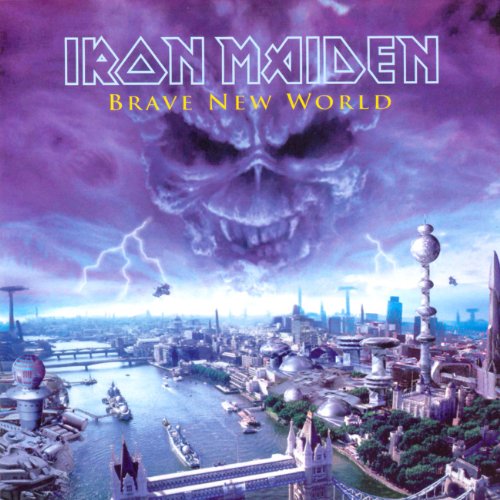 Brave New World (2000)
Brave New World is the last album I actually remember, though from magazine reviews. I definitely owned the Wicker Man single, CD1 version with a live Powerslave, and I was sufficiently not struck by it to trade it in with a bunch of other CDs, go back to Powerslave and Best of the Beast and stay there. The fact they'd released Dance of Death registered, as did the bad CGI cover, but none of the songs on it.
This is also the era in which the first decade sees most of the official best of compilations being released: two versions of Edward the Great, a b-sides disc as part of Eddie's Archive, US-only The Essential Iron Maiden, Somewhere Back in Time, and From Fear to Eternity last in 2010. The band are still huge, but managing their legacy with the gaps between studio albums growing.
I've been listening to The Wicker Man because it's on the Edward the Great best of album(s) and I have to say it's grown on me a lot. I vaguely recall having the single when it was released, mostly because it had a live version of Powerslave, and it being one of a ton of lacklustre CDs I traded in... which in hindsight was somewhat unfair. The band's style changed a lot since the mid-80s, there's more repetition in lyrics, more indulgent guitars, vocals are more shouty than screaming, and when it works it works. It does mean that whilst I can happily listen to the album now in the background I don't particularly remember the individual songs beyond its opener being strong.
Ghost of the Navigator is definitely one of those. Brave New World got added to the second version of the Edward the Great best of, apparently in place of Holy Smoke, and I'm not sure why. It's not a single and it's quite ballad-y and instrumental. You'd sway drunkenly to it at a gig, but wouldn't ask for it. Blood Brothers and The Mercenary? More pleasant filler, and I'd agree there are some Celtic overtones to this album although The Merc is a bit more traditional Maiden. Dream of Mirrors is a a standout song that sounds particularly like a Bruce solo album, as do others, and specifically I'm thinking of Balls to Picasso which was 1994. That had mediocre lyrics and was carried by the singer's enthusiasm and some of the instrumental arrangements too.
The Fallen Angel, The Nomad, Out of the Silent Planet, The Thin Line Between Love and Hate? Are also there, pleasant, and did I mention also there? I like the album but asides from the quality of the production this is almost Maiden as a laid back, somewhat bombastic pub band; something that probably helps to make the album work is that it was recorded live in studio. Maybe there were also deliberate attempts to meet Bruce on his own terms when he came back to the fold, given how much the sound reflects his solo work in the period, and yet apparently several tracks were written for Virtual XI. I realise most of this capsule review sounds like damning with faint praise, but it's very listenable and might be my favourite album of this listen through apart from Powerslave, being a good general mood listen.
* * *
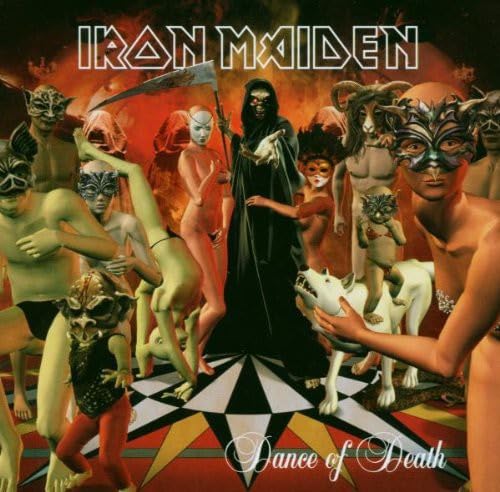 Dance of Death (2003)
The cover isn't that bad if you assume the intention was mannequins posed around Eddie as death, although there are much better fan versions if you google. The heavily motion-blurred partially nude hedonists in the CD booklet were a bit less expected, as they just don't come across as that sort of band.
Anyway, Wildest Dreams kicks in at a fair pace. The Maiden commentary site notes that when this track was previewed the band made a clear distinction between their stance on file-sharing and that of Metallica, seeing the value of promotion. It's decent if a bit repetitive, which Rainmaker follows up with a similar proposition. Both of these tracks were used on the second edition of the Edward The Great best of compilation, edging out a couple of tracks from Seventh Son (The Clairvoyant and Infinite Dreams).
No More Lies is more like it, a longer track with some repeated lyrics but much more galloping and fret-bothering. Montségur keeps up the attack, the intro reminding me of Losfer Words in a good way. With the lyrics it's almost Maiden-does-Sabaton although I agree with a reviewer that finds bits of the instrumental arrangements a bit jaunty for a song about a massacre. On the other hand the Cathars went out on their own terms, opting for death rather than renouncing their faith when targeted by the Catholic church. This is giving me positive vibes for the next Maiden album, which is about war.
Title track Dance of Death brings things down a bit, although builds back up. Parts of the vocals seem oddly raw. It's another Maiden song amongst many that would would as a pure instrumental. There are slightly weird stylised vocals on Gates of Tomorrow too, and whilst I've seen people call it filler it's pleasant enough like the track before it and has another nice indulgent guitar solo. So far the only black mark against Dance of Death is that I'd be more likely to queue up Brave New World.
New Frontier is apparently Nicko's first songwriting in the twenty years the band had been together, and it's interesting that the subject matter is cloning being meddling with ungodly forces given that he seems to be the only member with any strong religious leanings. If it's anti-science, it's no more so than the great science fiction tradition of Frankenstein's monster.
Paschendale is about one of the first World War massacres that Haig and others sent conscripted troops to die in, and is particularly famous for senseless loss of life and getting a specific reference by Sassoon. This probably pips Montségur for being as near to Sabaton as Maiden have come so far.
Face in the Sand has an opener that sounds remarkably like another song I can't immediately place, and vague enough lyrics people are still undecided what it's actually about. It could just as well be a moody coda to the track before it, and if by now you've come appreciate the prog side of Maiden (particularly later Maiden) the instruments, chanting and structure changes will be likeable. Age of Innocence is Steve kicking back at miscarriages of justice regarding self-defence and opportunistic violent crime, apparently, and since Blair had been in power since 1997 might reasonably be taken as late backlash about government and judiciary handling of the Tony Martin case. Except this doesn't really come across, vagueness still being a hallmark of the later part of the album's lyrics. I get the feeling a lot of listeners like this open-ended style of story telling, whereas personally it lacks focus, particularly when there are lots of similar tracks.
Journeyman opens a bit reminiscent of Bruce's Tears of the Dragon before flowing into an acoustic instrumental with shades of the Inspector Morse theme tune, shifting perspective back from the downer lyrics of the previous tracks to something more upbeat but reflective in tone. All-in-all, you could treat Dance of Death as the second half of a double album with Brave New World and not feel misled. It's just that, as I said earlier, you probably wouldn't put it on otherwise, no track stands out as a hook to make you do so.
* * *
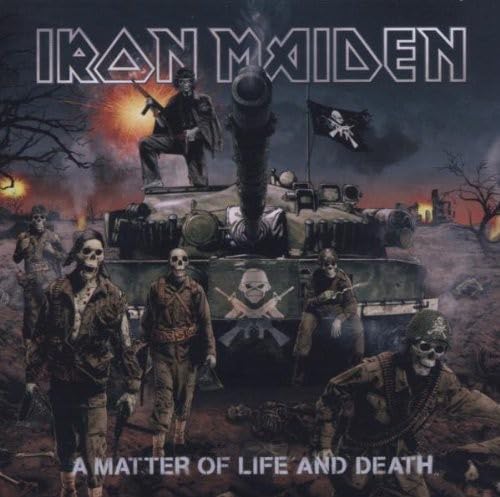 A Matter of Life and Death (2006)
Interesting points about this one are supposedly the mostly war themed lyrics and the band deciding not to master it after studio recording for a more 'live' feel. The band still has a very Brave New World and Dance of Death sound that I'm not sure really gets the best out of this approach. People go on about Motorhead having one song but by this point Maiden seem to have entered a phase of their career where the same can be said in a less flattering way. AMOLAD doesn't have any particularly obvious singles and people who rate it positively use descriptions like lengthy and complex. Overall, reviews are very mixed and qualified.
Different World is pleasant, having some almost boy band vocals between the air raid siren parts. These Colours Don't Run has a quiet start and it's a slow burn, feeling more like b-side material than an album track and chilled out for most of its run time. Brighter Than a Thousand Suns is about atomic war and features heavy riffs that show experimentation with a modern metal style, which I'd like far more without the high pitched bits played over most of it - this is where the album starts to lose me. The Pilgrim pulls things back a bit, being about religious nutjobs four hundred years ago, although even though it's only five minutes it manages to wander off after a few of them. The Longest Day addresses the Normandy landings, and is comfortably the best track so far. Out of the Shadows is more of a miss - like a lot of this era of Maiden, it's pleasant enough and melodic, but switches style as you're starting to enjoy the last one. Vocally it's a bit vapid and drags on. I suspect it'd play better if you were stoned.
The Reincarnation of Benjamin Breeg has some similar riffage to Brighter Than a Thousand Sons. Asides from the viral marketing angle of its (fictional) protagonist, I found it pretty dull. For the Greater Good of God is one of two tracks that are about nine and a half minutes, the other being the closer - and this one does the thing of regularly changing styles with success and is enjoyable and melodic. Lord of Light has some interesting guitar bits, although bands like CoF do far more with the devil as subject matter. Final track The Legacy I'd almost turned off by the halfway point, and although it picks up in places that wouldn't have been a bad decision.
I was somewhat excited for this one, and it felt more like a grind. A lot of reviews mention that they found the album was at its strongest for the last four tracks or so, and I'm not hearing it. Honestly, if you want war themed metal go and listen to Sabaton (specifically: Carolus Rex). You'll get stories rather than the less focused philosophising that constitutes Maiden's filler material. I respect the dedication of the Iron Maiden Commentary site to trying to expand on what the band might have meant, but this didn't grab me enough to inspire re-listens.
"We’re very proud of our history but we’re also very proud of the new album," stated guitarist Janick Gers. "There comes a point where we have to say: this is where we’re at now. You either stagnate or you try to push forward.” They've kind of done both, to my thinking. I'd happily put this on as background sound but the likelihood of picking it is really low. The album did well enough commercially, although the next two releases were an early era best of (Somewhere Back in Time) and the live soundtrack to a documentary (Flight 666) showing a band continuing to balance new output with established crowd pleasers.
* * *
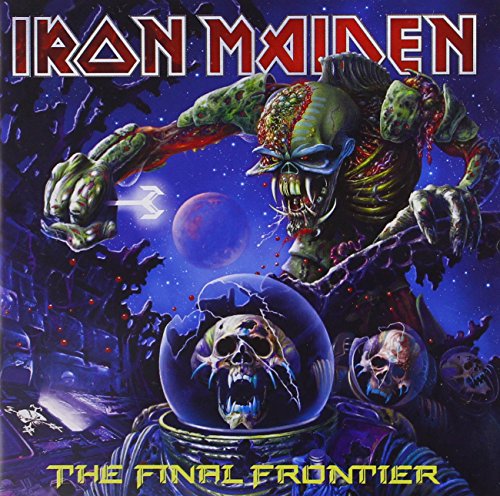 The Final Frontier (2010)
After the last album being rather a slog, I'd lost the will a bit to listen to the others and my notes get more scrappy. The entry about the back six albums is going to take a while to tidy up and post.
Satellite 15... The Final Frontier gets props for trying something different, then after about five minute switches into an upbeat and totally different rock track that's equally enjoyable if not exactly deep. El Dorado has more heavy bass, which helps to give this album its own sound and is told from the POV of a huckster and con-man. Mother of Mercy is a bit more ballady but driving, almost Eurovision in places and pleasant. Coming Home is actual ballad territory, Bruce singing about flying planes including Maiden's - there's still an energy and warmth to this the last couple of albums haven't really had for me.
The Alchemist is apparently about John Dee, occultist to Elizabeth I, and the song's fairly short and likeable. Isle of Avalon offers another track with British mythology links. Starblind has more of a straight ballad opening, pleasant enough musically but basically filler. The Talisman confirms we're well into pleasant filler territory, but the follower The Man Who Would Be King has distinctly un-Maiden instrumental parts and it's nice to see them trying new stuff before When the Wild Wind Blows offers a sleepy hug of a song to play us out.
All in all, many of the tracks on Final Frontier bring plenty of energy and the enthusiasm makes for a fun listen. Amongst the modern albums so far the yardstick is still Brave New World but this is a stronger entry than DOD and AMOLAD.
This is also the last album the commentary site covers, which might be a bit ominous given that the next album came out ten years ago. It also means I probably won't have a clue what most of the songs are supposedly about from this point on. I count this as a negative of a lot of Maiden's output, rather than a positive, as leaving things open to interpretation can be a plus but when applied to whole albums it makes for vague stories that aren't memorable. It's particularly a problem for a band whose best known songs are still those from decades ago. Even BNW doesn't particularly have stand out lyrics.
Listening to an interview with Bruce recently in 2025, which is a fascinating discussion of how his voice has changed with age and illness, I was reminded that Rime of the Ancient Mariner is a classic example of a story song that works. It's a detailed story and it connects with very specific and iconic literary history. 2000 onwards has fewer songs like that, so far. (Also, whilst I'm here, apparently the new More Balls to Picasso release cleans up the distortion on the vocal track for that album, apparently. Might have to get that.)
After this one came the From Fear To Eternity: The Best Of 1990-2010 compilation, following the Somewhere Back In Time: The Best Of: 1980-1989 one that addressed the first seven studio albums. It's a two disc album, reflecting the longer period of releases, straddling two very different decades stylistically. Lots of good tracks drawing from the eight album period, but it was always going to suffer (certainly for me) by comparison with 1996's two disc Best of the Beast.
* * *
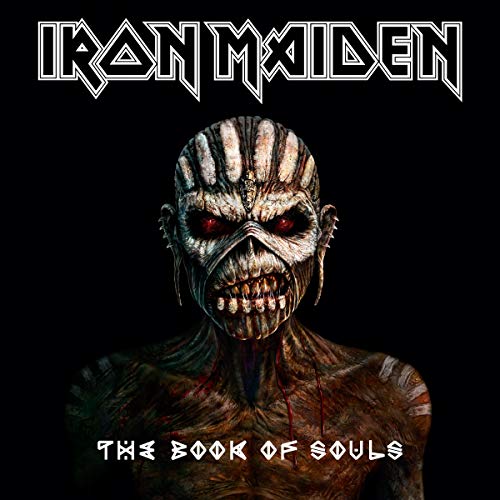 The Book of Souls (2015)
A double album at over 90 minutes, which I had mixed expectations about but more on that later after a listen through.
If Eternity Should Fail has very high energy, particularly for an 8min track; its sound is very different to the last few albums but still familiar. Speed Of Light has a distinct live feel and its guitar line is less maiden in places, feeling nicely distinct from previous material. It may not be an obvious single but it works as one, and there's more of the old high pitched Bruce here. The Great Unknown takes things down a bit, but not to its detriment, then with The Red And The Black the album hits a stride. It has a Rime of the Ancient Mariner chug and despite its length is fast and energetic - five minutes in the music reminds me of the Wildhearts and you can imagine being in a crowd with this being played. It's a great stand out track, and okay after 8 or 9 minutes it is going off into fretwanking but quickly gets back to driving guitars. I'm genuinely looking forward to listening to this album again at this point, and with When The River Runs Deep the energy keeps coming with the opening. I can see why reviewers were making comparisons with the 80s, and I can see this being a concept album in the way that Powerslave is, i.e. it isn't but there's a story thread running through enough songs that it feels like one - spiritual, natural, and historical in this case.
The titular The Book Of Souls has an exotic feel; I'm positively reminded of Powerslave actually... with a solid bit of Losfer Words thrown in. It's another long one and it's really good. Death Or Glory, meanwhile, is positively short at about five minutes and punchy with it. Shadows Of The Valley opens with a direct call back to the opening of Wasted Years and it's another chugging high energy track, which I've seen described as a Frankensteinian mix of older songs... and that's no bad thing. Tears Of A Clown is apparently about Robin Williams with solid rhyming lyrics and reminds a bit more of Bruce's solo work. You could end the album here, fit it easily onto a normal length CD-R and consider the remainder bonus tracks, or go for an 80 minute one and the next track as well. The Man Of Sorrows finally brings the pace down a bit and is the first track I'd be inclined to call filler, but by this point in the album if you've stuck around you aren't likely to mind.
Empire Of The Clouds is more of an event song. I thought this that with the album's imagery referencing ancient history that this was going be about mountain people of the Peruvian Andes, and that would've tracked with Maiden's habit of raiding films, literature and history for song ideas. It's actually about the 1930 R101 airship disaster which came before the Hindenberg one. A piano opening with minimalist instrumentals uses spoken story-telling, almost like a musical. Obviously this being Maiden it isn't the same the whole way through, and the way it does that reminds me of the tempo changes in some of the less successful earlier albums, not something I'd have picked for this one.
Like the track before it, I'm not so sure about this, but it's more to do with the length and arrangements. Whilst with modern media you probably aren't going to have to change a CD or keep flipping and switching vinyl records, and listening is more easily accommodated, splitting the tracks over two discs the way you have to with vinyl releases isn't a positive. Maybe if it'd been a bonus disc and the rest of the album on the first main one, it'd have worked better. It was issued as a single for Record Store Day in 2016 and that seems like a much more suitable approach to releasing it, particularly as it was backed with a twenty minute recording of Bruce and Nicko talking about the song, making it more its own thing.
I wasn't expecting the most recent albums to deliver another classic that with re-listens might rank with Powerslave or Brave New World, but BOS has a good claim to that. The Grauniad notes that it doesn't sound like a band of millionaires 40 years on, which is very true. It isn't phoning anything in. It reviews well elsewhere and, as people have noted, the longer tracks are well sequenced into the running order. So what are the factors that distinguish it? It feels like the less repetitive lyrics and clearer themes are paying off, in a nutshell. Less like an album that exists as an expectation to release something.
* * *
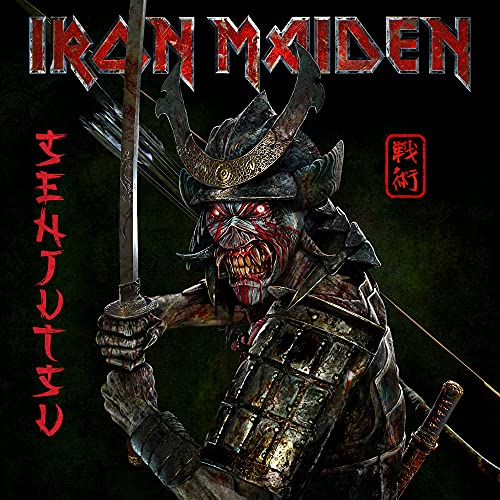 Senjutsu (2021)
Pleasant Prog. I haven't got much more than that. Senjutsu is almost the Mostly Harmless of a Maiden discography insofar as a couple of words can summarise an album that will have had a lot of creativity and time poured into it. It's reflective without being twee, I'm an hour into it and I'm sure I'll probably be coming back to it as background sound to work to. It's heavy on instrumentals, Death of the Celts being a stand out in this respect and kicking off a run of ten minute plus songs at the end of the album. So it's very distinct from BOS, but another album that was well worth taking time over both to record and listen. And there might be another to come with or following the band's 50th anniversary, teased by Dickinson last year. Nicko seems to be in favour of the band continuing without him if health prevents it. Will it be more of the same if it happens? I tend to doubt that, as even if albums like Virtual XI and AMOLAD are as low as my enjoyment got, there's clearly willingness to keep going and reinvent.
Overall my main listening picks from the Maiden catalogue would probably be, in release order: Powerslave, Best of the Beast (2CD), the 2002 first release of Edward the Great, Brave New World, Book of Souls, Senjutsu. There's a lot of in-between stuff that isn't as memorable or consistent, in my view, but I'm glad I can say that short list includes more modern era stuff than I thought it would and that there were regular upticks in expectations. Whilst Maiden aren't untouchable, Powerslave/BWN/BOS have filler to me, and Senjutsu is in a sense made wholly of it, the albums I had at the start of this listen through are important formative experiences, and it's good to have added some other enjoyable listens to those.
💬 Comments are off, but you can use the mail form to contact or see the about page for social media links.
