Windows enshittification in the year 2025 ►
◄ Project Zebra: Run like hell, you got the shot away, thunder

Well, it's not as if they cast Silence with Permanency, it's just been quiet in the D&D novel world for a long time. After TSR went bankrupt at the end of the 90s it was bought by Wizards of the Coast, who in turn were bought a couple of years later. Once part of Hasbro, novels were wound down over the following decade or so. Actually, everything D&D might be described as wound down, compared to yesteryear... there aren't that many official source books for current/recent editions, considering that 5th Edition has been around for over a decade: https://dungeonsanddragonsfan.com/dnd-5e-books-list/
But with D&D and Magic becoming cash cows early in the pandemic and production costs rising Hasbro have indicated a desire to become an IP company rather than primarily just selling toys, which means pushing WotC into its core business model to a greater extent. Hence the Open Gaming Licence scandal in which Hasbro tries to claim ownership of third party content, and another mess in which the Pinkerton agency got sent to intimidate someone who'd been sold unreleased Magic cards by mistake.
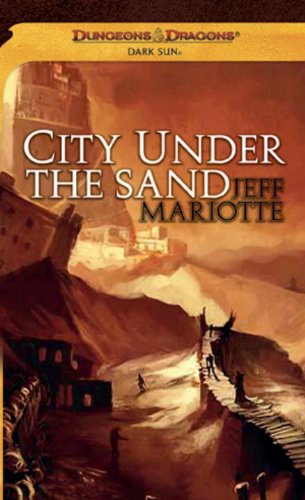 Any resurgence hasn't extended to game setting novels. Previously there'd been somewhat lukewarm restarts such as the City Under the Sand, Under the Crimson Sun and Death Mark novels set in Dark Sun which were published 2010 onwards. From 2012 onwards this reduced, and after 2016 and a gap it's basically one (Drizzt) Forgotten Realms novel a year published by HarperCollins either because R.A. Salvatore remains bankable or has incriminating photos of Hasbro top brass:
https://forgottenrealms.fandom.com/wiki/List_of_novels_in_order_of_publication
Any resurgence hasn't extended to game setting novels. Previously there'd been somewhat lukewarm restarts such as the City Under the Sand, Under the Crimson Sun and Death Mark novels set in Dark Sun which were published 2010 onwards. From 2012 onwards this reduced, and after 2016 and a gap it's basically one (Drizzt) Forgotten Realms novel a year published by HarperCollins either because R.A. Salvatore remains bankable or has incriminating photos of Hasbro top brass:
https://forgottenrealms.fandom.com/wiki/List_of_novels_in_order_of_publication
It's worth noting that the old novels sold significantly higher numbers than game products and that Dragonlance and Drizzt novels are New York Times bestsellers in the tens of millions. The trick as with any kind of publishing is finding the big-sellers. Adam Whitehead posits in a blog article that Hasbro bean-counters didn't care about the benefits of brand reinforcement, and set licensing costs that meant it was only worth publishing Drizzt. Which sounds entirely plausible, and in line with how the company manages other brands such as Transformers as compared to, eg, McFarlane's willingness to take a bit of a reduction in profit in economic downturns.
This other fan discussion has some interesting comments about TSR using a boom in novel pre order sales to underwrite failing business activities being a reason it fell apart when interest waned in novels, plus the company's discontinuing distribution without fully realising how much contractual returns would cost them. I've also got Ben Riggs' Slaying the Dragon about the downfall of TSR to read at some point, and have read other books and articles about the history of the game and creators in the past, so whilst I would say that there's usually multiple angles poor financial management is the simplest credible explanation. The company went from very high to low.
Anyway, someone senior enough at Hasbro/WotC seems to have realised again that without fiction, it's difficult to attract new audiences. And with no prospect of a Baldur's Gate sequel to lure in people who want to bang monsters then letting writers take a crack at prose adverts makes sense. Obviously audiences only overlap so much and it's not a particularly 1-1 ratio, Drizzt readers mostly won't play D&D just like MCU audiences mostly won't buy comics, but awareness does help to drive sales.
So circa 2023 Penguin/RandomHouse/DelRay started up with film tie-ins, plus some Dragonlance, Spelljammer and Forgotten Realms. Whilst a welcome return for fans, my view would be that Dragonlance has been in the wilderness for years, a couple of decent trilogies sprawling out over around 200 books: https://www.tlbranson.com/dragonlance-books-in-order/
I'm willing to give the Spelljammer (Memory's Wake) and Forgotten Realms (The Fallbacks: Bound for Ruin) ones a go at some point, but if this is slanted towards 5E D&D style where the rules and tone are heavily influenced by videogames (spells like Goodberry, for example, being handwaving on-demand minor healing) it'll be a short trial period. Reviews of the FR suggest written-to-spec game gateway with the emphasis on Young Adult. The SJ title seems aimed at an older audience, and clearly intended to tie into a 2022 campaign box set - a simpler and more steampunk way of joining together settings for adventures than Planescape.
With relatively few source books being published, there's a definitely focus by WotC on getting players to engage with and buy stuff from multiple settings, such as the Vecna: Eve of Ruin campaign that specifically has players hopping across them.
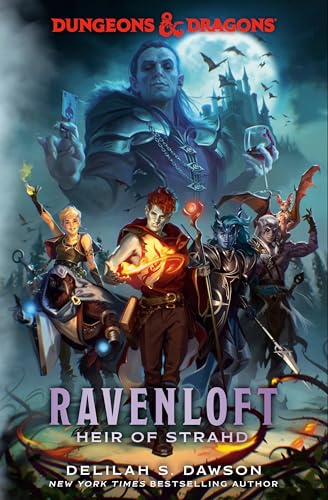 More recently, someone pointed out a new Ravenloft novel (Heir of Strahd) which is due for release in May. There are a lot of people commenting on the inappropriately smiley cast marching into Ravenloft. And I'd be tempted to add inappropriately diverse cast, too. Residents of Barovia might be used to all sorts arriving through the Mists, and even animal-human hybrids, but whilst it's fun to play with expectations and genres most characters in the setting should be bolt-the-shutters standoffish towards outsiders at the best of times. It's horror with feudal trappings and fearful peasants rather than generic D&D. You could argue that the intention of the setting is to drop D&D parties into isekai surroundings, I suppose, and Ravenloft isn't trying to be World of Darkness, but it's still more grimdark than not. However, the author seems well-regarded, so maybe it's dropping a party into Ravenloft to break them.
Previous Ravenloft novels haven't exactly been all gold, nor have the domains that comprise the demi-plane (each ruled by a trapped Darklord, with different types of horror that connect with the curse of that evil individual or group). Much of this is highly derivative, Mordenheim being based on Frankenstein, Tristen Hiregaard being Jekyll & Hyde, etc. There are also three weird and not really Ravenloft novels which were published in 2008, using real-world historical settings.
I'd tend to agree with this reader's guide that the Strahd, Soth and Azalin ones form a core, and even some of those are bog-standard fantasy. Barovia is synonymous with Ravenloft and the other domains and darklords are set dressing. As for the last three: "Ravenloft: Dominion A minuscule attempt to revive Ravenloft during the D&D 4th edition era, this was a trilogy of novels that featured domains and darklords plucked from historical Earth. The domains and characters featured in these novels were wholly original and unrelated to any previous lore. There was a London metro station domain, a civil-war-era Southern plantation domain, etc. These books met such little demand, that the last one had to be released as a free PDF."
You might do better watching experienced people play Curse of Strahd. I've watched some of Curse of Strahdanya (great DM, Strahd is gender-swapped, characters got a bit murder hobo-ish after a couple of episodes) and Twice Bitten has the premise that the players have all previously DM-ed the campaign and the DM authored a guide to modifying Curse of Strahd with improvements (which I have skimmed previously, and is very well-done). Other live-play groups exist of course.
Besides scandals created entirely by Hasbro management, the modern boom in D&D has seen WotC has come under fire in recent years by people seeing real-world politics in game materials. Things like drow, orcs and chromatic/metallic dragons having inherent alignment, Ravenloft gypsies and the Wachter catgirl. In the current edition of D&D orcs have been removed from the Monster Manual and turned into a playable race, inspired by other games such as World of Warcraft. (It's worth mentioning that there've always been good aligned dark elves, undead, etc, in settings such as Forgotten Realms, they're just outliers.)
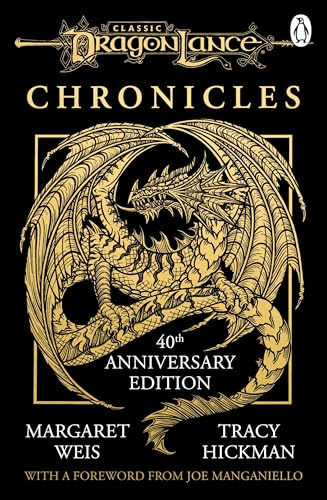 So will things like Dragonlance novel reprints be edited, or is that just game books? I think just content warnings as is now de rigeur for anything from most eras, particularly as ebooks already exist. Some revisionism would hardly be unprecedented though; anyone reading Stratemyer Syndicate novels such as the Hardy Boys and Nancy Drew in my generation wasn't getting the original texts which were written from the 1920s onwards, Agatha Christie didn't use the title And Then There Were None, etc. We almost certainly won't see Dark Sun revived with its fantasy apocalypse survivalism and players dealing with the ethics of doing more damage to Athas's ravaged ecosystem or being complicit with the tyrannical, slaving Sorcerer-Kings.
In terms of criticising WotC, I can't say I've ever drawn parallels between orcs and black people (maybe that's an American thing) and would go more for the relative freezing out of FR authors, including setting creator Ed Greenwood despite making it an official setting and using it for the recent film, which is typically churlish modern-day Hasbro. Although it's worth noting both that content, old and new, continues to be published under WotC arrangements with Dungeon Masters Guild, and that he's fiercely broad church in welcoming all comers to gaming.
https://en.wikipedia.org/wiki/Ed_Greenwood#Role-playing_games (5e)
https://www.dmsguild.com/browse.php?author=Ed%20Greenwood&page=1&sort=4a
https://roleplayersguild.wordpress.com/2016/04/06/ed-greenwood-on-dragonspears-controversy/
As well as species-ism D&D also, depending on your point of view, continues to steer towards inclusivity or head-scratching inclusion of real-world concepts such as wheelchair accessible dungeons with predictably mixed responses. On that one I'd probably say that in a game with regeneration, raising the dead and levitation, plus in high-magic worlds magical prosthetics or Gondian devices, or even strapping small characters to a mount, all fit the tone of a game and don't require much more suspension of disbelief than anything else. Dungeons without steps and sheer drops, not so much. But in a hobby activity that's about communally making stuff up as entertainment, people can knock themselves out. The more generally accepted concept of groups discussing and agreeing how much body horror is okay, or whether there'll be giant insects (or piss golems or Oglaf references) isn't necessarily a bad one and if nothing else gives an opportunity for potential players to make it clear you wouldn't want to spend time with them.
This entry is going to be horribly susceptible to link rot, isn't it?
💬 Comments are off, but you can use the mail form to contact or see the about page for social media links.
